A capacitor smaller than a grain of rice is influencing the delivery schedules of AI servers. And the performance ceiling of this tiny component is written into a white powder.
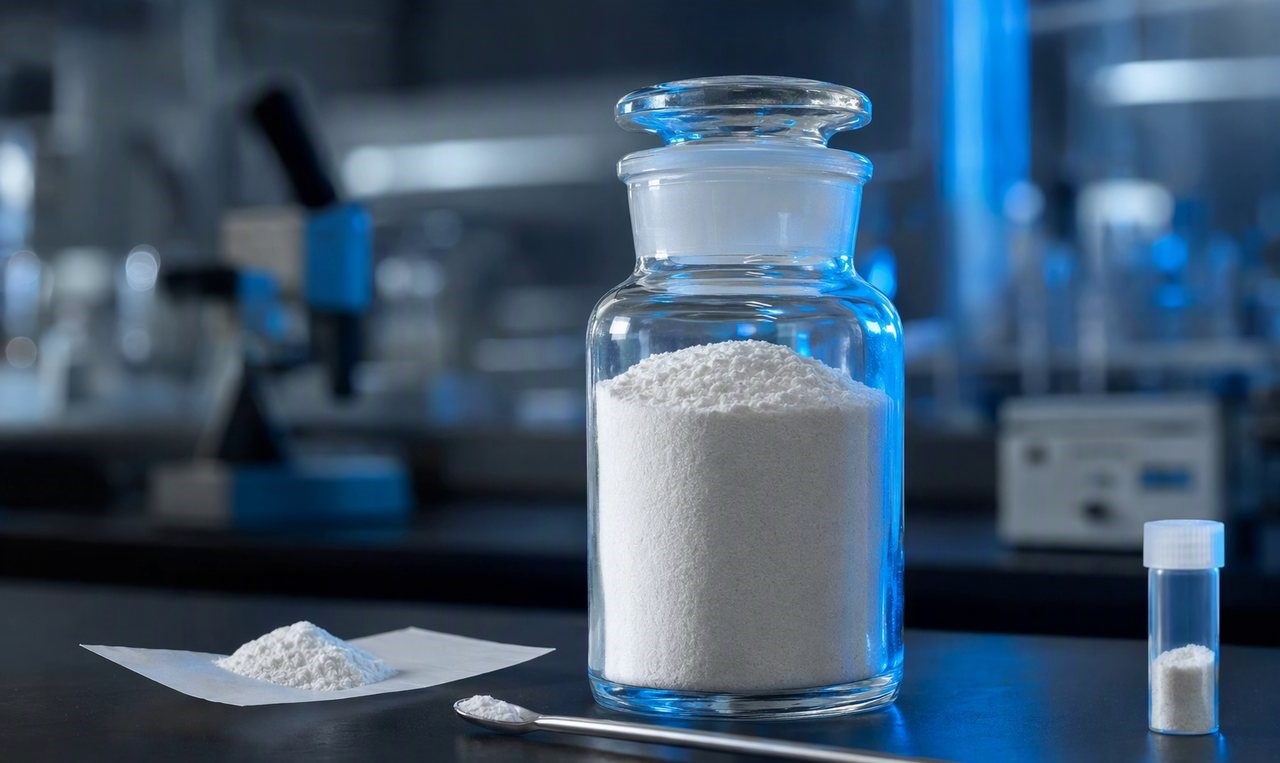
Barium titanate (BaTiO3) is an ABO3-type perovskite oxide that appears as a white crystalline powder. It has a density of approximately 6.0 g/cm3 and a melting point of 1,618–1,625°C.
With its high dielectric constant and low dielectric loss, barium titanate is widely regarded as a cornerstone of the electronic ceramics industry. It is also the only dielectric material currently used in the mass production of multilayer ceramic capacitors (MLCCs).
Conventional products are prepared through high-temperature solid-state reactions between barium carbonate and titanium dioxide. Advanced-grade powders, however, require more sophisticated preparation methods, such as hydrothermal synthesis, oxalate precipitation, and sol-gel processing.
Standard Grade: Particle size above 200 nm and purity of approximately 99.5%. Used in household appliances and entry-level consumer electronics.
Modified Mid-Range Grade: Particle size of 150–300 nm and purity above 99.9%. Used in smartphones and basic industrial control equipment.
Advanced Nanoscale Grade: Particle size of 50–120 nm and purity above 99.99%. Primarily used in AI servers and high-voltage automotive-grade products.
Barium titanate is by no means a new material, but market developments in 2026 have brought it into the spotlight.
Murata Manufacturing, a leading MLCC manufacturer, was among the first to raise prices for products used in AI servers and high-end automotive applications, with increases of 15%–35%. Taiyo Yuden and Samsung Electro-Mechanics subsequently followed suit.
Okayama Murata Manufacturing, a subsidiary of Murata, also plans to invest approximately JPY 9 billion in a new ceramic raw material production line. The first wave of investment in capacity expansion is flowing upstream to ceramic powders.
According to estimates by the China Business Industry Research Institute, the global barium titanate market was worth approximately RMB 8.413 billion in 2025 and is projected to exceed RMB 14.3 billion by 2030, representing a compound annual growth rate of approximately 11.2%.
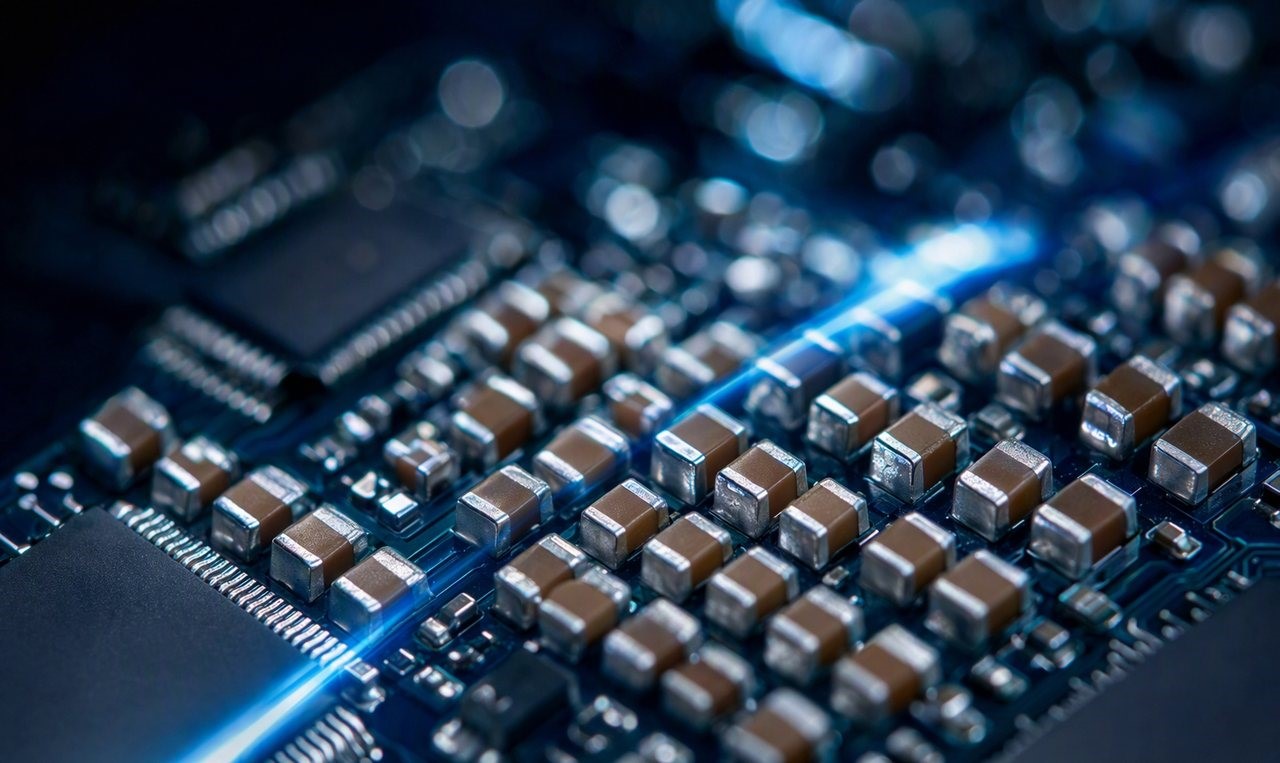
An AI server can incorporate roughly ten times as many MLCCs as a general-purpose server. Its dielectric layers can be as thin as the submicron scale, placing higher demands on powder particle size, purity, and doping formulations.
Industry Note: Most newly added production capacity is concentrated in conventional low-end solid-state synthesis. Supply flexibility for high-end hydrothermal powders remains extremely limited, creating a market structure characterized by oversupply at the low end and shortages at the high end.
At room temperature, barium titanate can have a dielectric constant in the thousands, with a Curie temperature of approximately 120°C.
Below the Curie temperature, Ti4+ ions shift away from the centers of their oxygen octahedra, causing tetragonal lattice distortion and spontaneous polarization. These structural changes give rise to its ferroelectric, piezoelectric, and pyroelectric properties.
Its intrinsic band gap is approximately 3.2 eV. Following donor doping or reduction sintering, barium titanate can be converted into an n-type semiconductor. Its electrical resistance also rises sharply near the Curie temperature, producing the positive temperature coefficient (PTC) effect.
Tunable Dielectric Properties
The incorporation of elements such as lanthanum, yttrium, and dysprosium can reduce temperature-dependent variations in dielectric properties.
Controllable Polarization
Ferroelectric domains can be aligned under an applied electric field, providing a basis for non-volatile memory applications.
Sharp Changes in Electrical Resistance
The PTC effect enables the material to limit current automatically under overcurrent or overheating conditions.
MLCC dielectric materials account for more than 70% of downstream demand for barium titanate. Dielectric layers can be thinner than 1 μm while still requiring hundreds or even thousands of layers to be stacked. Even minor variations in powder properties can therefore have a multiplied impact on manufacturing yields.
Other important applications include PTC thermistors and piezoelectric devices, which are used in overcurrent protection, self-regulating heating systems, ultrasonic transducers, and various sensors.
More advanced applications include microwave dielectric resonators, ferroelectric memories, and energy storage ceramics.
Competition in the high-end powder market ultimately comes down to one word: stability.
Particle size distributions must remain narrow within the same batch, doping ratios must be consistent across different batches, and suppliers must also work closely with customers throughout the 12-to-24-month validation cycles for automotive-grade and computing-related applications.
This is precisely where custom synthesis companies can play an important role.
Guangxi Titan New Material Technology Co., Ltd. is a core enterprise of Titan New Materials Group and an important R&D base for metal-based compounds. Barium titanate is one of its key products in the field of electronic ceramic oxides, and customized solutions can be provided according to customers‘ dielectric formulations and processing windows.
The race for AI computing power is often portrayed as a competition between chips. Yet the ability to deliver a complete system on schedule is frequently determined by seemingly insignificant components and the powders behind them.
The current market upturn presents an opportunity for the industry to strengthen formulation capabilities, improve batch-to-batch consistency, and build the patience and technical support needed to complete lengthy validation processes.