From precision ceramics to resin-based composites, dimensional changes caused by temperature fluctuations can affect the fit and assembly of components. Aluminum tungstate [Al2(WO4)3, also written as Al2W3O12] is a low-thermal-expansion inorganic material that has attracted research interest. Researchers are exploring two approaches: processing it into dense ceramics and incorporating it into resins as a filler to reduce the thermal expansion of composite materials.
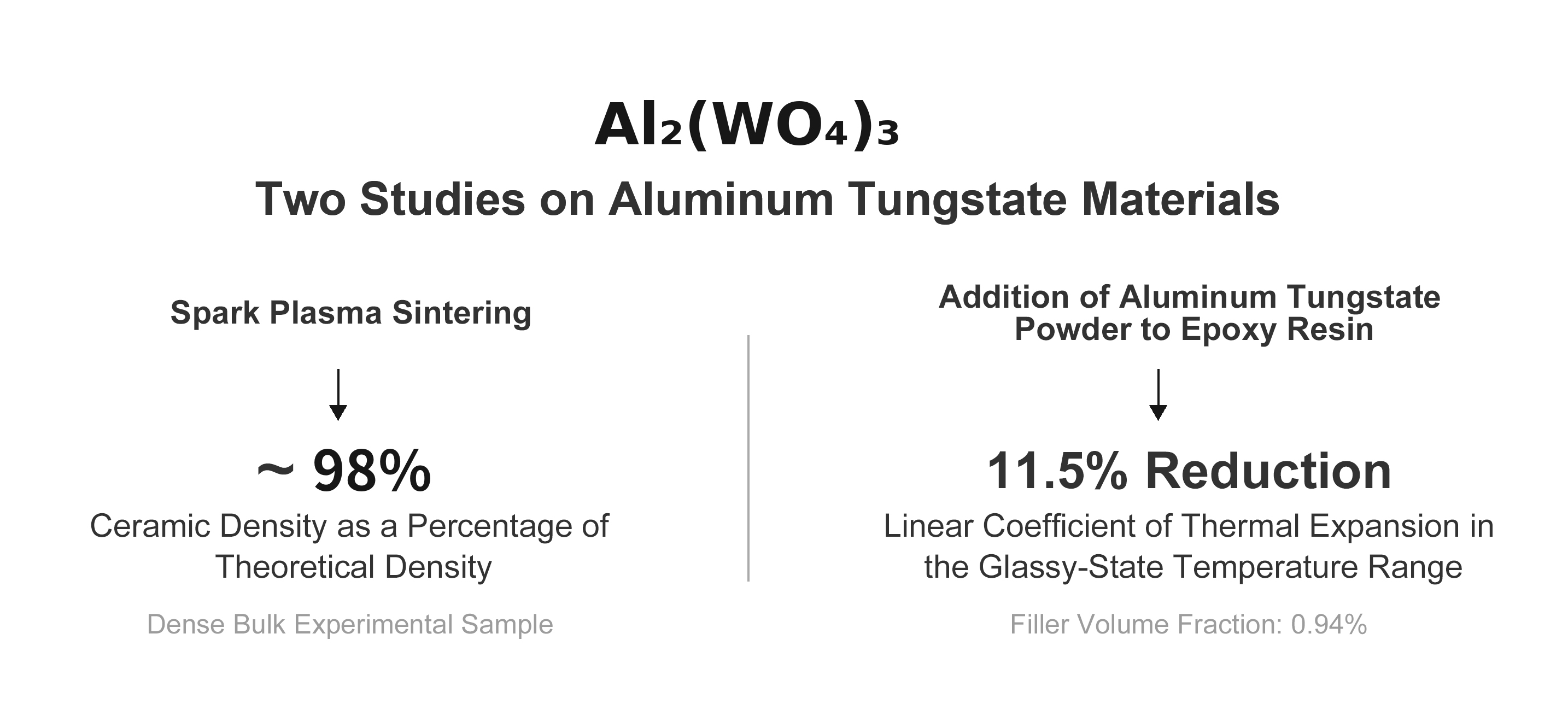
Figure 1. Laboratory research results on dense aluminum tungstate ceramics and epoxy composites
Within the measurement range of 20 to 800 °C, two crystallographic axes of orthorhombic aluminum tungstate contract as the temperature rises, while the third expands. These directional changes can partially offset one another. However, once the material is processed into a ceramic, its actual bulk thermal expansion is also affected by grain structure, porosity, and microcracks. Therefore, it needs to be measured experimentally within the intended operating temperature range.
When preparing low-thermal-expansion ceramics, the sintering process influences the formation of pores and microcracks. In an experimental comparison of rapid pressureless sintering and spark plasma sintering, the aluminum tungstate samples produced by the latter achieved a density of approximately 98% of the theoretical density. They also exhibited a fine microstructure, with no microcracks observed. Such dense samples provide a basis for further evaluating the ceramic‘s resistance to cracking under rapid heating and cooling conditions.
In a series of formulation experiments involving aluminum tungstate and epoxy resin, adding the filler at 0.94% by volume of the composite (4.0% by mass) reduced the linear coefficient of thermal expansion of the sample by 11.5% compared with unfilled epoxy resin within the glassy temperature region.
The lower the linear coefficient of thermal expansion, the smaller the change in a material‘s length under the same temperature difference. When adjusting the formulation, the dispersion of the powder in the resin and the quality of its interaction with the resin can also affect the actual performance of the composite.
For thermal-shock-resistant ceramics, testing is needed to determine whether the material cracks during rapid heating and cooling and whether it can retain its strength after repeated temperature cycles.
For epoxy composites, the dimensional changes of the formulation within the actual operating temperature range must be confirmed, along with its processing flowability and interfacial durability.
Both the ceramic densification process and the resin formulations described above are based on laboratory research. Before these materials are used in precision components, further validation is required, taking into account component dimensions, operating environments, and assembly requirements.
Guangxi Titan New Material Technology Co., Ltd. welcomes exchanges and discussions with universities, research institutions, and industry partners on aluminum tungstate powder selection, ceramic sintering processes, and the development of low-thermal-expansion composite materials.