Those tongue-twisting names on ingredient lists are, in fact, fine ceramic powders.
Turn your makeup bag inside out and you will not find a single piece of ceramic. Yet the complex, hard-to-pronounce entries on the ingredient list—titanium dioxide, zinc oxide, calcium sodium borosilicate—are close relatives of ceramics. Today, let‘s look at five little-known facts.
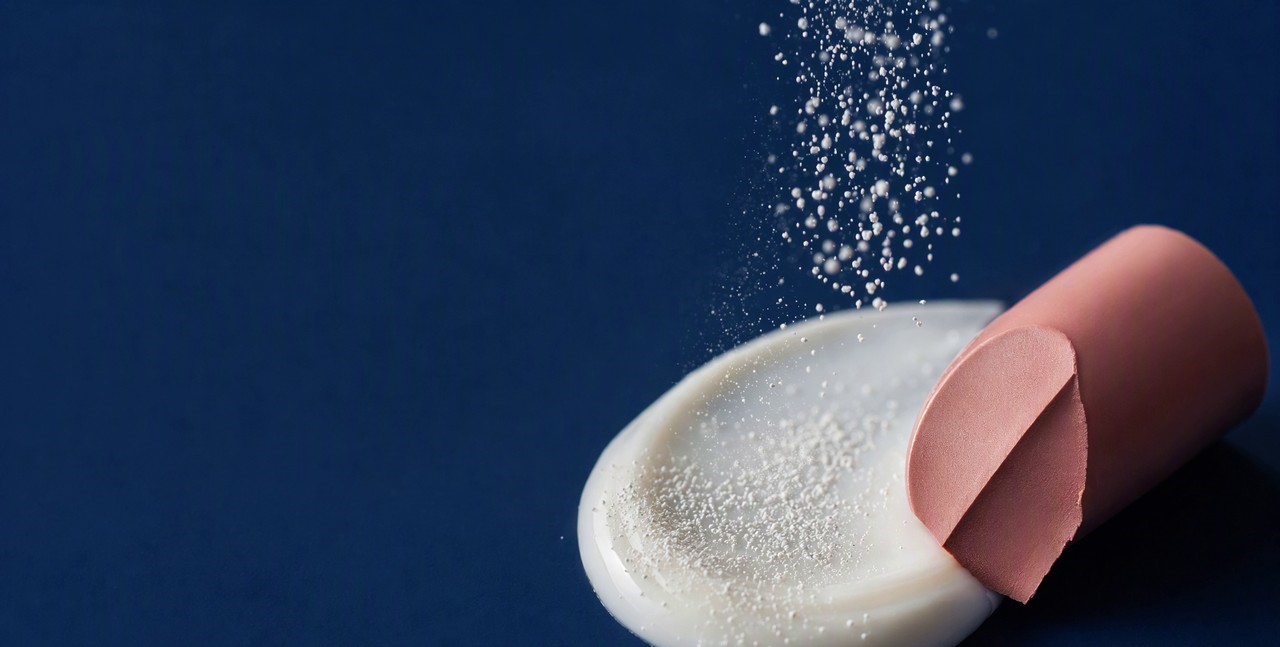
Physical (mineral) sunscreens rely on titanium dioxide and zinc oxide. They reflect, scatter, and partially absorb ultraviolet (UV) rays without being consumed in the process. The catch? They are white. Titanium dioxide in its rutile form has a refractive index as high as 2.7, and zinc oxide about 2.0—far higher than the roughly 1.4 of the skin‘s stratum corneum or the 1.0 of air. The greater the difference in refractive index, the more strongly light is bounced away, which is exactly why your face ends up with a stark white cast.
Engineers solve this not by using less material but by shrinking the particles. When the powders are milled down to 30–100 nanometers—well below the 400–700 nanometer wavelengths of visible light—visible light passes straight through, while the shorter UV wavelengths are still effectively blocked. Transparency and sun protection, then, are not mutually exclusive; it is all a matter of precise sizing.
Under UV light, pure titanium dioxide generates free radicals—a property that makes it excellent for self-cleaning coatings and photo catalytic pollutant decomposition, but highly unsuitable for skin. Cosmetic-grade titanium dioxide is therefore first coated with a shell of silicon dioxide or aluminum oxide to suppress its chemical activity. It is then wrapped in a layer of stearic acid or silicone oil, which makes the surface lipophilic (oil-loving) so that the powder disperses evenly through a formula instead of clumping.
In short, the price premium for cosmetic-grade titanium dioxide—compared with standard industrial grades—buys precise control over particle size, the two-layer coating, and rigorous impurity management.
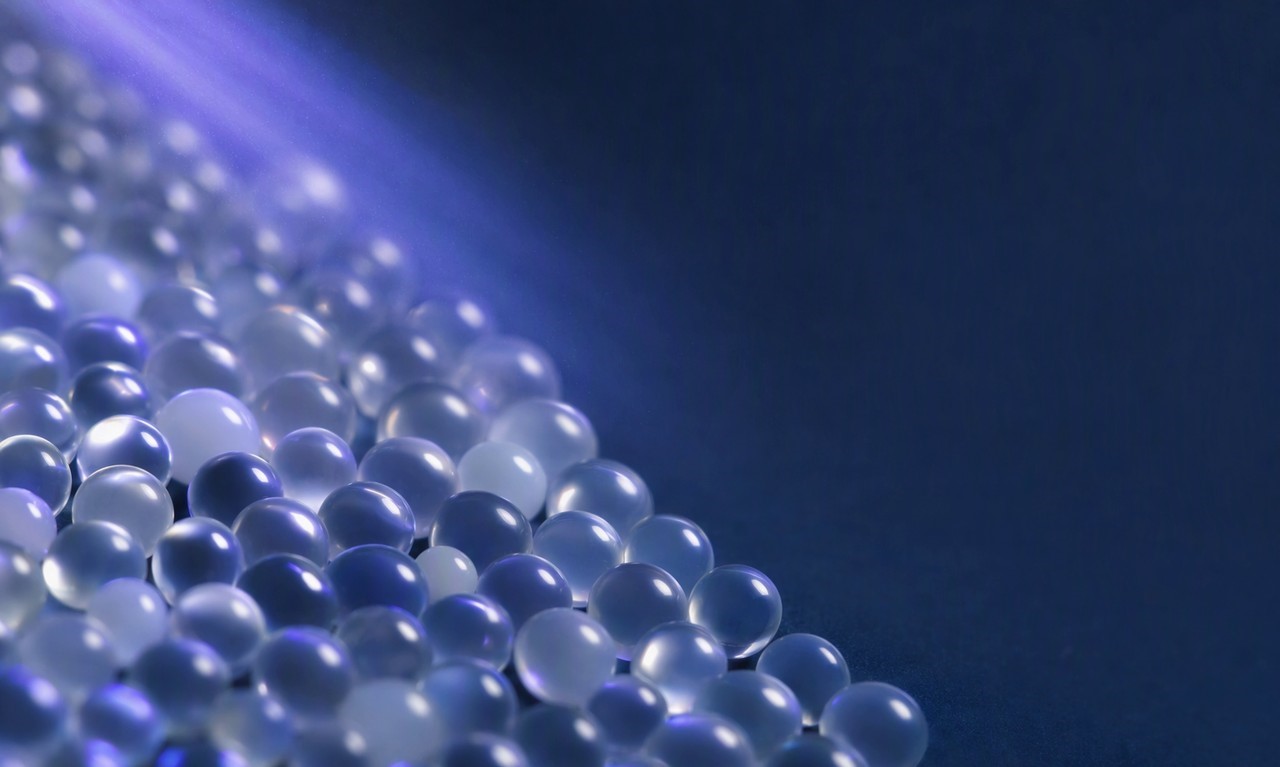
High-end lipsticks and oil-control setting powders often contain borosilicate glass microbeads, listed on ingredient labels as calcium sodium borosilicate. These are perfectly spherical, micron-sized beads. On application they act like countless microbeads, turning a dragging motion into a rolling one and giving an even, effortless glide that never tugs at the skin. Their uniform shape also softens light through diffuse reflection, blurring the appearance of pores and fine lines for a soft-focus, matte finish that does not rely on harsh shimmer. The beads are chemically inert, meaning they do not readily react with oils or pigments; the Cosmetic Ingredient Review (CIR) expert panel has concluded that they are safe as currently used.
These inorganic powders are insoluble in water and generally do not react with skin. Current research suggests they remain largely on the surface of the stratum corneum, with negligible amounts penetrating into the bloodstream. The real concern, however, is inhalation: the risk posed by sprays and airborne particles entering the lungs is entirely different from applying them to the skin. Therefore, when using sunscreen spray, one should hold their breath and avoid breathing it in—especially around children.
The ability to produce powders at the nanoscale, shape them into perfect spheres, apply precise coatings, and hold batch-to-batch consistency is known as advanced ceramics and fine inorganic powder technology. It is a foundational materials discipline for new energy, semiconductors, optoelectronics, and biomedicine alike. The beauty industry is merely one of its applications—and perhaps the least conspicuous.
The next time you apply sunscreen, consider the invisible nano-optical shield on your face. The ultimate frontier of competition in cosmetic ingredients is, in fact, the materials industry.
Guangxi Titan New Materials Technology Co., Ltd., a core enterprise of the Titan New Materials Group, serves as a specialized center for the custom synthesis of metal-based compounds and a hub for the R&D and production of advanced materials. The company focuses on R&D, production, and technical services for advanced ceramic materials and high-purity fine inorganic compounds. Through collaborative laboratories and pilot-scale production platforms established with universities and research institutions, it covers the entire value chain—from laboratory-scale R&D to industrial-scale production—while actively pursuing global expansion and the development of a B2B trading platform.
Product Focus: High-purity fine inorganic compounds | Complex oxides | Organometallic compounds | Advanced ceramic powders and nanopowders