Potassium osmate dihydrate (K2OsO4·2H2O) is an important osmium-containing compound widely used in organic synthesis for the dihydroxylation of alkenes. It enables researchers to convert carbon-carbon double bonds into vicinal diols, providing a valuable route to the synthesis of pharmaceutical intermediates, functional molecules, and fine chemicals.
Osmium tetroxide (OsO4) is a highly reactive but relatively volatile oxidizing reagent, which increases the safety risks associated with its storage and handling.
Potassium osmate dihydrate, by contrast, is a solid compound that is easier to weigh and add to a reaction mixture. It can serve as the osmium source in catalytic systems, reducing the handling difficulties associated with the direct use of volatile osmium tetroxide.
Under suitable reaction conditions, potassium osmate can catalyze the oxidation of alkenes. A reoxidant converts the reduced osmium species formed during the reaction back into its active form, allowing the catalytic cycle to continue and reducing the amount of osmium reagent required.
Nevertheless, potassium osmate is toxic and must be handled with appropriate safety precautions. Osmium-containing waste must also be properly managed.
For example, α-cedrene can be converted into α,α-cedranediol in the presence of potassium osmate dihydrate and N-methylmorpholine N-oxide (NMO).
A related patent describes a preparation method in which isobutanol is used as the solvent and the reaction is carried out under reflux for approximately 24 hours. In one example, α,α-cedranediol was obtained in an isolated yield of 81% and a purity of 99.5%.
This example illustrates the potential of potassium osmate in the synthesis of fine chemical intermediates.
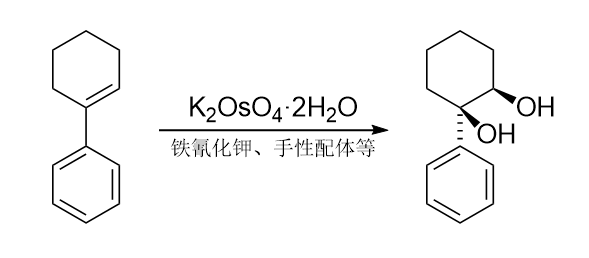
Potassium osmate can also be used to control the stereoselectivity of a reaction. Taking 1-phenylcyclohexene as an example, the substrate can be converted into a cis-1,2-diol with a defined stereochemistry through Sharpless asymmetric dihydroxylation using a system comprising potassium osmate dihydrate, a chiral ligand, and potassium ferricyanide.
The chiral ligand controls the facial selectivity of the reaction, favoring the formation of one enantiomer over the other and providing a valuable strategy for synthesizing chiral molecules.
The ease of weighing and adding potassium osmate as a solid reagent, together with its use in important selective oxidation reactions, makes it particularly valuable in organic synthesis.
Guangxi Titan New Material Technology Co., Ltd. specializes in organometallic compounds and is committed to providing high-quality products and services for R&D and industrial applications.
We welcome universities, research institutions, companies, and industry partners to engage with us and explore opportunities for collaboration. We look forward to working with our partners to further explore the application potential of organometallic compounds and advance technological innovation and industrial development.