As emerging industries such as perovskite photovoltaics, advanced energy storage, precision optoelectronics, and quantum information continue to develop rapidly, the strategic value of rubidium, a rare alkali metal, and its industrial demand are steadily increasing. As one of the stable orthophosphates with the highest rubidium content, rubidium phosphate (Rb3PO4) offers excellent ionic conductivity, chemical reactivity, and optical modulation properties. It is evolving from a conventional chemical raw material into a key functional material for new energy, catalysis, and precision devices, making it a particularly promising segment of the high-end rubidium salt market.
At room temperature, rubidium phosphate is a white to off?white crystalline powder. It is a normal rubidium orthophosphate and is readily deliquescent. Several of its intrinsic properties support its potential for use in advanced materials:
Rubidium accounts for approximately 73% of its theoretical mass fraction, making rubidium phosphate one of the stable phosphates with the highest rubidium content currently available. It is readily soluble in water at room temperature, and its aqueous solution is weakly alkaline. Its ionic conductivity is significantly higher than that of conventional rubidium salts such as rubidium chloride and rubidium nitrate, giving it inherent advantages in solid electrolytes and ion-conducting materials.
Rubidium phosphate combines the structural stability of the phosphate framework with the high reactivity of rubidium ions. It can serve as a rubidium source in various material systems to regulate crystal lattices and modify material properties. It can also be used as a precursor for preparing other high?purity rubidium salts and rubidium?based functional materials.
The solid-state structure of rubidium phosphate remains stable at high temperatures. It has a melting point of approximately 1,450°C and undergoes a crystal phase transition at around 1,040°C. It can maintain a stable phase under high?temperature processing conditions such as ceramic sintering, thin-film deposition, and catalyst calcination. Temperature and atmospheric conditions can also be adjusted to facilitate stepwise reactions, making it compatible with different processing windows.
Rubidium exhibits characteristic spectral responses, and rubidium phosphate can be used to prepare scintillation detection materials. These materials respond sensitively to radiation and high?energy particles and offer excellent energy resolution, indicating potential applications in nuclear radiation detection and precision optical devices. Rubidium phosphate can also serve as a component in specialty optical glass, where it helps regulate refractive index and dispersion properties.
Taking advantage of the electron?donating properties of rubidium ions, rubidium phosphate can serve as an effective catalyst promoter. By modifying the surface electronic structure of the primary catalyst, it can enhance catalytic activity and reaction selectivity, demonstrating considerable potential in catalytic systems for chemical synthesis and exhaust gas treatment.
Rubidium phosphate is highly hygroscopic and is prone to surface deliquescence when the ambient relative humidity exceeds 40%. Consequently, stringent requirements apply to its storage, transportation, and packaging conditions. Advanced applications also demand extremely strict control over purity and impurities. Alkali metal impurities such as sodium and potassium can directly affect the stability and optoelectronic performance of downstream devices. As a result, the production of high?purity products with purity levels of 99.9% or above places extremely high demands on synthesis and purification processes.

Illustration: High-purity rubidium phosphate reagent
Rubidium phosphate is a key rubidium dopant source for perovskite solar cells. Introducing rubidium ions into the ABX3 crystal lattice of the perovskite light-absorbing layer can effectively improve charge carrier mobility, suppress current-voltage hysteresis, and passivate grain boundary defects, thereby significantly enhancing photoelectric conversion efficiency and long?term operational stability.
As the industrialization of perovskite photovoltaics continues to accelerate, demand for low?impurity, high-purity rubidium phosphate is growing rapidly, making this one of the fastest-growing downstream application areas for rubidium salts.
In addition, rubidium phosphate can serve as an electrolyte additive in high?performance lithium-ion batteries and solid-state battery systems, helping optimize interfacial ion transport and improve rate capability and cycle life.
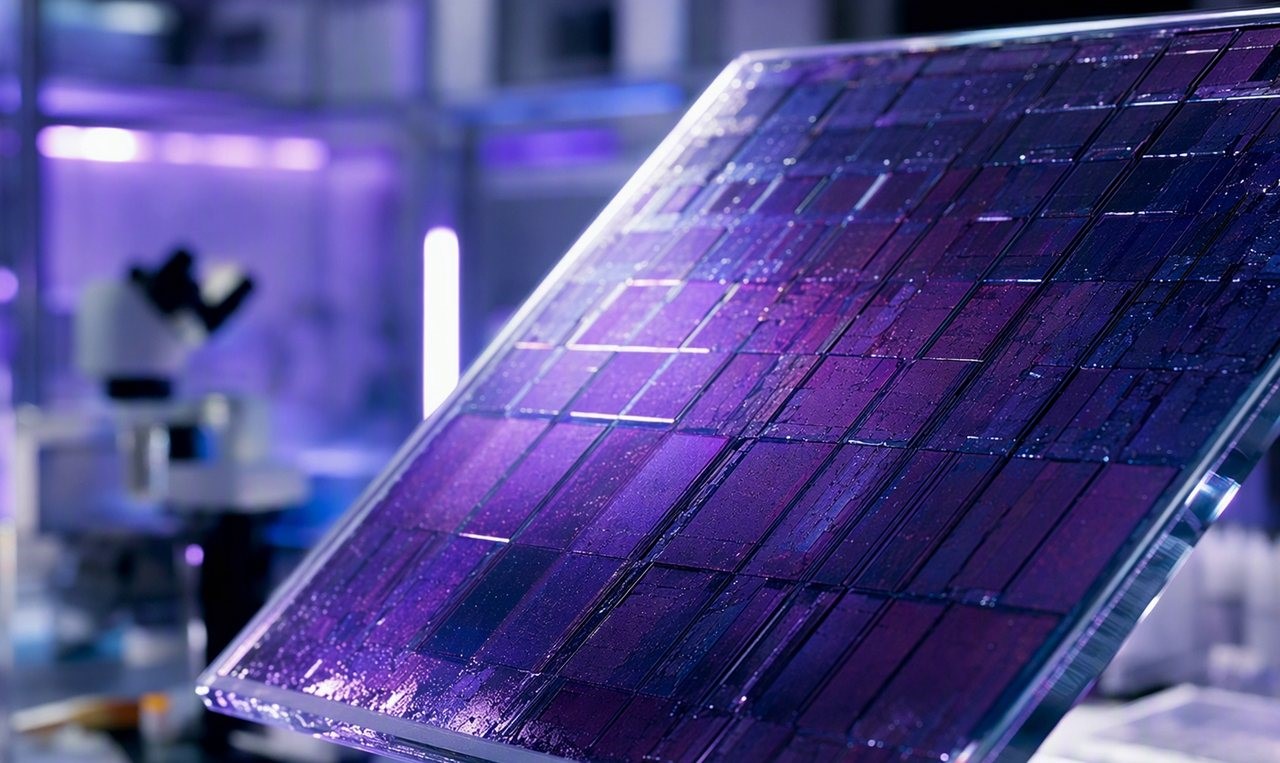
Illustration: Perovskite photovoltaic cell
In chemical synthesis, rubidium phosphate is commonly used as a catalyst promoter in systems involving oxidation, hydrogenation, and flue gas denitrification.
Through the electronic regulation of active sites by rubidium ions, it can significantly enhance the low?temperature catalytic activity and product selectivity of primary catalysts, including platinum?based and vanadium?based catalysts. For example, in the catalytic reduction of nitric oxide (NO) by carbon monoxide (CO), the introduction of rubidium components can substantially increase reactant conversion, delivering significantly better results than systems without such additives.
Rubidium phosphate is also a basic precursor material for preparing metallic rubidium, other high-purity rubidium salts, and rubidium-based functional materials.
Rubidium phosphate can be used to prepare rubidium-based scintillation crystals and optoelectronic detection materials. These materials exhibit sensitive responses to X-rays and gamma rays (γ-rays) and offer excellent energy resolution, making them potentially useful in nuclear medical imaging, industrial non?destructive testing, and radiation dose monitoring.
Rubidium-based phosphate materials have also demonstrated promising optical modulation properties in the development of nonlinear optical crystals and frequency?conversion devices.
Rubidium is the core working medium in rubidium atomic clocks. High-purity rubidium phosphate can serve as a rubidium source for preparing key components of these clocks, which provide high-precision time and frequency standards for satellite navigation, communication base stations, and aerospace timing systems.
With the development of 6G communications, the low-altitude economy, and satellite internet, demand for compact, high-precision rubidium atomic clocks continues to increase, driving corresponding growth in demand for high?purity rubidium salts upstream.
In specialty optical glass and low-melting-point glass formulations, rubidium phosphate can regulate the refractive index, coefficient of thermal expansion, and chemical stability of glass, thereby improving its optical transmittance.
In functional ceramic systems, it can serve as a sintering aid and property-modifying component to optimize ceramic densification and ionic conductivity.
Since the beginning of 2026, China‘s rubidium industry has entered an accelerated phase of strategic development, with the industrial value of high-end functional rubidium salts such as rubidium phosphate becoming increasingly prominent.
The accelerating industrialization of perovskite photovoltaics has become a major driver of growing demand for rubidium salts. Demand from 6G communications, atomic clocks, and solid?state batteries is also continuing to emerge, driving the rubidium salt market‘s transition from conventional chemical applications toward advanced technology sectors. High-purity functional rubidium salts such as rubidium phosphate are growing significantly faster than the industry average.
In September 2026, the First National Forum on the Development of the Cesium and Rubidium Industry was held in Nanchang. A clear industry consensus emerged: rubidium is a critical strategic resource supporting national defense and military industries, aerospace, navigation and timing, 6G communications, and quantum technologies. Achieving independent control over the supply of high-end rubidium salts has become a central industry objective.
Previously, China‘s high-end, high-purity rubidium salts had long relied on imports, leaving supply chains vulnerable to changes in the international environment. The need for domestic substitution has therefore become increasingly urgent.
The supply of conventional industrial?grade rubidium salts is gradually becoming more sufficient. However, ultra?high?purity rubidium phosphate for photovoltaic, optoelectronic, and semiconductor applications requires stringent control over alkali metal and heavy metal impurities, while synthesis and purification involve substantial technical barriers.
Stable supplies of high?quality products remain relatively scarce, and only a limited number of domestic suppliers can provide customized purity and particle size specifications.
Producing high?purity, low?impurity rubidium phosphate requires stringent control throughout the entire process, from raw material purification and synthesis process management to thorough impurity removal, drying, and packaging. These requirements represent one of the major challenges currently facing the industry‘s supply side.
Guangxi Titan New Material Technology Co., Ltd. specializes in the R&D, production, and customized services for high?purity fine inorganic chemicals and organometallic compounds. It is one of the leading suppliers in the field of custom synthesis of metal?based compounds.
Drawing on its R&D and industrial operations in Nanning, Guilin, Kunming, and other locations, the company has established in?depth industry–university–research collaborations with universities including Kunming University of Science and Technology and Guilin University of Technology. It has also established a chemical development and testing base for lithium, cesium, and rubidium products, building an integrated technical system covering laboratory R&D, pilot?scale development, and large?scale production. Through these efforts, the company has accumulated extensive process experience in rare and precious metal compounds and high?purity phosphates.
Building on its technical expertise in rubidium salt systems, Guangxi Titan can supply rubidium phosphate (Rb3PO4) in multiple purity grades ranging from 99% to 99.99%.
For different applications in perovskite photovoltaics, catalysis, optoelectronics, and specialty glass, the company can tailor product purity, particle size, and impurity specifications to meet specific customer requirements. Its supply capabilities can accommodate small?batch samples for R&D as well as stable, large?scale commercial supply.
The company has also established an online new materials service platform for customers worldwide, providing integrated services including technical consultation, sample evaluation, and order coordination.
Guangxi Titan will continue to focus on rare and precious metal compounds, further improve the processes for its high?purity rubidium and cesium salt products, and pursue collaborative innovation with partners in photovoltaics, new energy, optoelectronics, and catalysis. Together, these efforts will contribute to greater self?reliance and control over the supply of China‘s advanced strategic metal materials and support high?quality industry development.